


Have you ever wished for a mood ring that could steer your investment decisions? VIX index investing aims to do exactly that by gauging the market's jitters for the upcoming month. Using everyday tools like ETFs and futures, think of them as snapshots of the market’s mood, traders can adjust their plans when things start to get off track. In this post, we'll explore how these smart strategies can safeguard your portfolio and give you a clearer view of the market, helping you make bold and well-informed investment choices.
VIX Index Investing: Thriving with Market Clarity
VIX Index Investing is all about tapping into products that keep track of how much the S&P 500 might fluctuate during the next 30 days. You can’t buy the index directly, so most traders turn to futures, ETFs, and ETNs to get exposure. Many investors use this approach as a shield during market downturns or to benefit from sudden spikes in volatility, much like what happened in 2008 and early 2020.
Consider these strategies:
- Using long VIX futures can dynamically hedge your portfolio and potentially boost its performance. Just be mindful of risks like contango, which happens when future prices stay above the current spot index.
- Some traders prefer short-term plays with leveraged ETNs to try and profit when market stress ramps up.
- Adding VIX ETFs to your mix may provide diversification with returns that don’t closely follow other assets, helping to lower overall portfolio risk. For more insights, check out related index investing strategies.
- Combining equity positions with option-based volatility overlays can serve as an extra safety net in your stock investments.
- Calendar-spread derivative trades allow you to take advantage of changes between periods of contango and backwardation.
At the heart of it all is figuring out which product fits best with the current market conditions. You need to weigh trade costs and match the right instrument to your risk tolerance and investment goals. It’s kind of like picking the perfect tool for a specific job, when you get it right, everything works much more smoothly.
VIX Index Fundamentals and Calculation

The VIX index, launched by Cboe in 1993, is like a financial mood ring that hints at how the S&P 500 might behave over the next 30 days. It offers a friendly snapshot of market sentiment, letting investors know whether things are calm or if jitters might be setting in.
The index works by using a weighted average of S&P 500 put and call option prices. In simple terms, it blends these prices to project an annualized volatility for a hypothetical 30-day period. Imagine a scenario where the numbers suggest a 20 percent move, this helps investors brace for what the month ahead might bring.
One of the standout features of the VIX is its real-time updating every 15 seconds. This constant refresh gives traders an almost immediate view of market anxiety or ease, allowing them to adapt their strategies quickly as conditions change.
Looking back, sharp spikes in the VIX have often matched up with downturns in the S&P 500, especially during stressful market times like in 2008 or early 2020. It serves as a trusted gauge of market fear, helping investors prepare thoughtfully when the market feels unpredictable.
Accessing the VIX via Futures and ETFs
Investors aren’t able to buy the VIX index directly, so VIX futures were created as a workaround. These contracts let you tap into the market’s expectations for future volatility by using the VIX index, which itself is based on S&P 500 option prices, as a foundation. In simple terms, they let you trade on or hedge against changes in volatility without owning the actual index.
You can also connect with this volatility gauge through popular VIX ETFs and ETNs. These funds hold VIX futures contracts and regularly roll them over as they approach expiration. Keep in mind that the costs related to this rolling process can affect your returns. On the plus side, these products usually have solid trading volumes, which helps maintain good liquidity.
Understanding the impact of contango and backwardation is key when dealing with these instruments. Contango happens when the futures price is higher than the current index value, imagine a VIX at 15 while a one-month future is at 16. Since April 2016, historical data shows that three-month VIX futures traded above the spot level in 49 out of 60 months, which can erode profits during rollovers. Conversely, backwardation, when future prices are lower than the current level, can lead to more favorable outcomes.
When comparing VIX futures with ETF structures, consider differences in overall costs, liquidity, and how they’re taxed. Futures might give you lower direct costs and tighter market pricing, but ETFs offer more straightforward access, which can be particularly appealing for smaller or less experienced investors.
Risk Management and Hedging with VIX Index Investing

Market volatility products act like a safety net when the market takes a hard hit. Even when your stock positions drop sharply, VIX-linked products can help ease the pain. Think of them as a backup plan that steps in when market confidence is low and the S&P 500 starts to struggle.
Now, you might consider using tail-risk insurance strategies or layering dynamic hedging overlays for extra protection. Some investors even use VIX options as a form of portfolio insurance. It's like having an umbrella ready when it suddenly starts to pour. Pairing these options with more flexible approaches such as dynamic hedging gives you both security and the adaptability you need to navigate uncertain times.
Timing is key with this strategy. Often, you'll notice the VIX spiking just before the S&P 500 reaches its lowest point. That spike can be a helpful signal to rebalance your portfolio. So if you see a sudden jump in the VIX while your equity investments start to decline, it might be the right moment to reduce your stock exposure and shift to safer assets.
Keep an eye on details like position sizing, cost management, and roll costs when you hold these products. Small changes in position sizes can lead to a more balanced protection strategy, and watching roll costs helps you avoid unexpected fees. With careful attention, you're not just bracing for market storms, you're actively managing risk with smart, informed decisions.
Historical Performance and Case Studies in VIX Investing
Market ups and downs like those in 2008 and early 2020 offer real-life lessons. During those stressful times, VIX-linked products didn't always act as you might expect. In simple terms, the index shot up, and the unique risks of each product, especially those tied to roll mechanics, became clear.
Imagine this: on April 30, 2021, a $10,000 investment in a VIX ETF might have given you steadier returns compared to a futures-based ETN. The futures product, however, depends a lot on the cost of rolling contracts. In a market setup called contango, each time you roll, those extra costs can gradually eat away at your gains.
Roll mechanics really do make a difference. When futures trade above the current spot level, every roll process drags down potential returns. On the other hand, if the market is in backwardation, the roll process can actually work more in your favor with better yields.
In the end, this analysis reminds us that it's essential to see historical performance as part of a bigger picture. Instead of looking at case studies in isolation, investors should consider how product design works together with market conditions. Noticing when returns stray far from the spot VIX reinforces the need for smart, clear risk management strategies that stay sharp even during market stress.
Practical VIX Index Investing in Trading Platforms
Understanding Futures Tickers
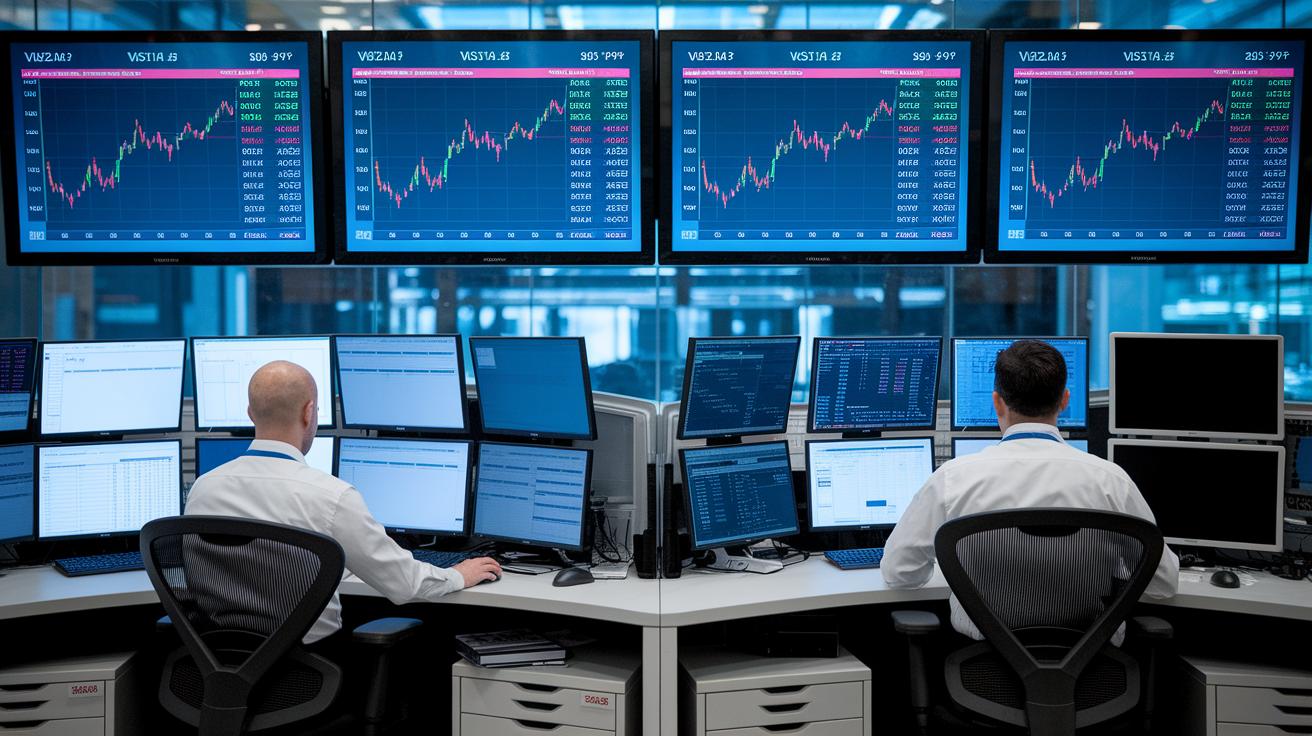
Think of VIX futures tickers as helpful signposts along your trading journey. A ticker like VX1 signals that you're looking at the front-month contract, the one that expires next, while VX2 points you to the following contract. Essentially, the number tells you the order of expiry. So, when you see VX1 on your screen, it hints that this is your nearest opportunity to ride a market sentiment shift. Knowing which month a contract expires is key to planning your entries and exits, helping you manage risk while aligning your trades with real-time market changes.
Using Live Data and Charts
Live data feeds are like your constant companion, keeping you updated on even the smallest shifts in market fear gauges. Most trading platforms refresh these feeds every 15 seconds, so you never miss a beat. For example, using charting tools on platforms like TradingView, you can overlay VIX futures curves to clearly see changes in the term structure. This visual approach helps you spot patterns that indicate whether the market is in contango (future prices higher than expected) or backwardation (future prices lower than expected). In short, these real-time insights give you the flexibility to adjust your trading strategy on the fly, ensuring your trades stay in tune with the fast-changing market landscape.
Final Words
In the action, this article breaks down vix index investing in clear, actionable steps. We explored dynamic hedging, short-term plays, and diversification with ETFs. We also touched on market instruments like futures and derivatives while emphasizing risk management and cost considerations.
The discussion helped unpack historical performance and practical trading setups. The guidance offers readers a realistic view of current market strategies, leaving you confident about bolstering your financial toolkit. Stay optimistic, smart moves today can lead to a brighter tomorrow.
FAQ
What does VIX mean in investing?
The VIX measures the expected volatility of the S&P 500 over the next 30 days using S&P option prices, offering a clear gauge for market fear and anticipated price fluctuations.
Can I invest in the VIX index?
The VIX itself isn’t directly investable; instead, you gain exposure through futures, ETFs, or ETNs that mimic the index’s behavior and provide tools for hedging and diversification.
How do VIX charts reflect market sentiment?
VIX charts display trends in market uncertainty derived from the Index CBOE VIX, offering investors a live visualization of volatility levels and risk perceptions tied to the S&P 500.
What role do VIX futures prices play in trading?
VIX futures prices reflect the market’s forecast for future volatility and are used by investors in hedging strategies, though factors like contango can influence their return profiles.
Do you buy when the VIX is high or low?
The decision to buy isn’t solely about high or low VIX levels; a high VIX can indicate market stress and a potential hedging opportunity, while a low VIX suggests calm but requires context-specific risk analysis.
What is the Index CBOE VIX Index and how are its prices predicted?
The Index CBOE VIX monitors real-time market fear by tracking expected volatility, and while its price predictions vary, its movements help investors anticipate potential market shifts.
Is the VIX a good stock to buy?
The VIX isn’t a stock at all; it’s a volatility index used as a benchmark for market sentiment, with related products serving as tools for risk management rather than traditional equity investments.