


Sometimes, a change in global policy can really shake up the financial market. For example, recent events have driven gold prices from below $3,000 to nearly $3,800 in just a few months – an increase of over 80%! This quick jump shows why many investors lean on gold as a safe harbor during uncertain times.
We’re here to break down the trends behind these moves. One key driver is the growing defense budgets that many countries are now prioritizing. Plus, there’s also a noticeable shift away from the US dollar, which boosts gold’s attractiveness even more.
In fact, if you’ve ever wondered how these factors work together to influence your investments, you’re in the right place. Let’s walk through these trends step by step, keeping things clear and conversational so you can see why gold might be the smart choice for your portfolio.
Key Trends Driving Gold Investments
Gold hit a record high of $3,800 per ounce in late 2025, delivering an impressive 83% return since 2024. Prices jumped from $2,900 in February 2025 to about $3,700 in September 2025, showing a strong 42% gain year-to-date compared to 27% the previous year. This surge comes from a mix of factors, including increased geopolitical tensions, think hefty tariffs of 50% on India, 15% on the EU, and 25% on Mexico. Ever wondered how one policy change can send prices soaring? It’s like watching gold shoot up overnight because of global policy shifts.
Another key element is cost-push inflation driven by rising global defense budgets. When governments spend more on defense, it creates inflationary pressure, and gold becomes a popular hedge against those rising costs. Plus, with the ongoing move away from relying solely on the US dollar, a process called de-dollarization, investors are turning to gold because it often moves in the opposite direction of the US Dollar Index. Weekly evaluations show an average gain of about $30, while monthly assessments point to roughly a 4% increase, thanks to short-term metal momentum and subtle changes in interest rates.
Large institutional investors are also playing their part. Predictions for bullion priced in rupees point to about a 6% appreciation in India by 2026, while dollar-based bullion might see a premium increase between 3% and 6%. This global shift in demand confirms gold’s enduring appeal as a safe haven asset, even during times of crisis or economic downturn, it remains a core piece in well-diversified portfolios.
Historical Performance and Long-Term Valuation in Gold Investment Trends
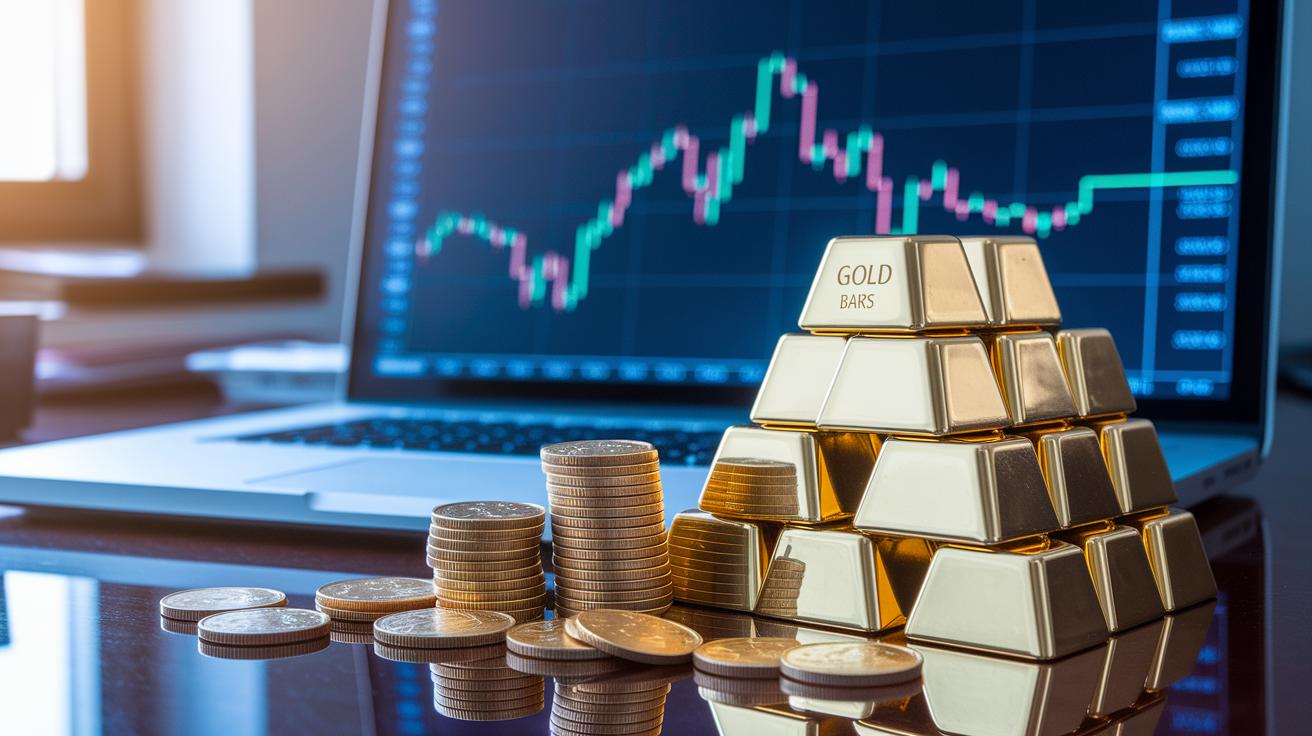
Gold has proven itself time and again as a dependable asset, even as economic situations change. It averages annual returns of about 4 to 6 percent, showing how it evolved from the classical gold standard into a safe haven in our modern fiat system. Over the past 25 years, gold’s overall gains have stood strong during market crises, unlike the more unpredictable ups and downs of stocks and bonds.
For the last 15 years, central banks have continuously increased their gold reserves, underlining its importance in a well-rounded investment portfolio. When you break down the trends over each decade, you see that even though gold might wiggle in the short term, its long-run value remains solid. This stability is why so many investors include gold in their plans for future financial security. In fact, clear charts and graphs help investors quickly compare gold’s performance with other asset classes as we head toward 2030.
| Year | Price (USD/oz) | Annual Return (%) |
|---|---|---|
| 2015 | $1,060 | +2% |
| 2016 | $1,150 | +4% |
| 2017 | $1,230 | +5% |
| 2018 | $1,350 | +6% |
| 2019 | $1,480 | +3% |
| 2020 | $1,800 | +8% |
| 2021 | $2,200 | +10% |
| 2022 | $2,500 | +12% |
| 2023 | $2,700 | +15% |
| 2024 | $2,900 | +27% |
| 2025 | $3,800 | +31% |
Central Bank and ETF Strategies Influencing Gold Investment Trends
Central banks have been on a steady gold-buying streak for over 15 years. In 2024 alone, world regulators snapped up more than 1,000 tonnes of gold, a clear sign they trust gold as a safe haven during volatile times. They’re driven by issues like fiscal imbalances, market jitters, and a move away from relying solely on the US dollar. In simple words, when economies feel shaky, gold becomes a reassuring anchor against inflation and external pressures. Looking ahead, experts expect roughly 900 tonnes of gold purchases in both 2025 and 2026, securing reserves while boosting liquidity during uncertain periods. One expert even said that this strategy makes gold indispensable in a diversified portfolio, especially when stocks or bonds start to feel the heat.
Gold ETFs have been echoing this confidence with a notable jump in demand. By mid-2025, assets under management soared to $383 billion. Total holdings surged by 397 tonnes to hit an impressive 3,616 tonnes. This influx of liquidity shows why many investors see gold as a safe bet, its performance doesn’t wobble as much as equities or bonds. It offers a calmer ride during market stress, and some analysts even estimate gold could generate annual returns of 30–35% during turbulent periods. Alternatively, if the economy slips further, returns might fall to a steadier 10–15%. Whether you’re a casual investor or a seasoned one, these movements highlight gold’s role as a smart buffer in times of financial uncertainty, mirroring a broader institutional shift toward preserving wealth.
Gold Investment Trends: Bright Future Ahead
Worldwide, gold investments are looking strong. Experts predict that gold priced in India's rupees might jump by 6% in 2026, while in the U.S. and EU, dollar-based bullion is trading at a 3% to 6% premium because more investors are turning to hard assets.
Locally, the picture is equally interesting. For example, ASEAN markets are expected to see central banks boost their gold buys by 5%. Even in the U.S., unique regional trends are emerging. Think about California, where bullion premiums could rise by roughly $40 per ounce, or Texas, where forecasts hint at a state-level premium increase of around 3%.
By blending these local insights with global trends, we get a clear view of the dynamic forces shaping today’s gold investment scene.
Technical Indicators and Momentum Analysis in Gold Investment Trends
Gold’s current movement shows a lively short-term momentum, driven by an annualized volatility of 15%. Weekly price checks in 2025 reflect an average uptick of about $30, while monthly figures hint at a modest 4% growth. And when you look at the first quarter, demand shifts are up by 8% compared to last year. Simple tools like the 50-day moving average (MA) crossover offer clear visual cues for investors. For example, a chart where the 50-day MA crosses above the 200-day MA often sparks investor interest. If you'd like to see more of these straightforward techniques and visuals, check out the detailed guide at Technical Analysis of the Financial Markets.
Digging into rate fluctuations adds another layer to managing risk. This approach helps break down price changes in a market known for its ups and downs. It acts as a handy tool when looking at quarterly changes in demand and setting up a realistic risk profile. Imagine each modest weekly gain as a small step that builds into a larger trend; it’s like putting together stepping stones that pave the way for significant performance in gold. For a deeper look at assessing risk with month-to-month and quarterly data, visit Portfolio Risk and Macroeconomic Indicators.
Gold Investment Trends: Bright Future Ahead

Looking ahead to the second half of 2025, experts expect gains in the 0–5% range, translating to an annual return of about 30–35%. One investor shared that a slow, steady climb can build a sound base for long-term growth. In other words, a gradual rise may set the stage for ongoing benefits.
Geopolitical factors remain a key consideration. If tensions ease, forecasts suggest that gold prices could drop by 12–17%, even as estimates for 2026 point to prices potentially surpassing $4,000 per ounce. Over a five-year span leading to 2030, experts project that gold might trade between $4,500 and $5,000 per ounce.
Gold equities have been particularly strong, with year-to-date gains hitting 120% amid rising reserve positions. Many investors are now using a 10% allocation in gold to help reduce market uncertainty. Indeed, a portfolio with just 10% allocated to gold can serve as a buffer against market volatility.
| Forecast Period | Price/Return Outlook | Key Insight |
|---|---|---|
| H2 2025 | 0–5% gain (30–35% annual return) | Steady growth with cautious market sentiment |
| 2026 | $4,000+ per ounce (potential 12–17% drop) | Prices are sensitive to geopolitical changes |
| 2030 (5-Year Forecast) | $4,500–$5,000 per ounce | Reliable value for long-term planning |
Final Words
In the action, we explored key gold investment trends shaping both immediate market momentum and long-term asset evaluation. We examined historical performance, central bank strategies, ETF flows, and emerging bullion markets, providing an accessible snapshot of current dynamics. Our discussion also touched on using technical tools to gauge short-term shifts and solid forecasts for future market behavior. These insights help equip you with a transparent, practical perspective on gold investment trends, an essential guide for crafting smarter, more strategic financial decisions. Stay positive and ready to adjust your plans for a brighter financial future.
FAQ
Q: What are the current gold investment trends today?
A: Gold investment trends today encompass robust price gains, geopolitical tensions, and noticeable technical momentum. Prices have reached record levels, driving increasing investor interest and expectations of continued strength.
Q: What are the gold price predictions for the next five years?
A: Gold price predictions for the next five years project gradual increases with potential highs above $4,000/oz by 2026 and a five-year outlook reaching between $4,500 and $5,000/oz based on current market drivers.
Q: How will gold demand trends look throughout 2025?
A: Gold demand trends in 2025 show steady increases across Q1 to Q3 as both central banks and ETFs bolster buying power, supported by market data and supply-demand charts that highlight growing investor confidence.
Q: Is the gold rate expected to drop or rise in the coming days?
A: Gold rate forecasts indicate short-term fluctuations with weekly gains averaging about $30, while technical indicators and market momentum point toward an overall upward trajectory in pricing.
Q: Is it a good idea to invest in gold now, and what would a $1,000 investment have looked like 10 years ago?
A: Investing in gold now offers a strong diversification hedge amid market uncertainties. A $1,000 investment ten years ago would have produced significant returns, showcasing gold’s historical resilience during volatile periods.
Q: Can gold hit $5,000 in 2026?
A: Gold reaching $5,000 in 2026 is within the realm of possibility, with expert analysis suggesting that continued global demand and favorable technical trends could drive prices toward that significant milestone.