


Ever wonder why some folks manage their money so easily while you struggle to keep up? Budgeting is more than simply writing down your bills. It's about charting all your income and really understanding where your money goes. In this guide, you'll discover a straightforward, step-by-step method to organize your finances, making sure every expense has a clear purpose. Think of it like drawing a financial map that reveals your spending patterns and helps you make smarter choices. Ready to transform your everyday spending into a success story?
Step-by-Step Budget Creation Guide

Start by listing every source of income you have. It might be your regular paycheck, a side hustle, freelance work, or even investment returns. Write them all down as if you’re charting your own financial map, it's a simple first step that sets a solid foundation.
Then, jot down both your fixed expenses such as rent and utilities, and your variable ones like dining out or subscriptions. Seeing these expenses on paper gives you a clear picture of where your money is going, making it easier to spot areas to adjust.
Once you have your expenses recorded, group them into categories like groceries, transportation, and entertainment. This method helps you notice recurring patterns. For example, you might find a few small purchases that add up over time, just like a couple of repeated coffee shop visits might surprise you in your monthly spending.
With your spending sorted, set practical financial goals that match your income and outgoings. Maybe you’re aiming to build an emergency fund or contribute regularly to a savings plan. Next, subtract your total expenses from your total income. When every dollar has a purpose, you’ve created what’s known as a zero-based budget.
Now, take a look at your monthly savings plan. Try to set aside at least 10% of your income for savings or giving, all while ensuring the essentials, food, utilities, housing, and transportation, are always covered. And remember, your budget isn’t set in stone. As life changes, so should your plan.
This seven-step roadmap offers a straightforward way to take charge of your money, giving you confidence and clarity along your financial journey.
Tracking and Categorizing Expenses in Your Budget
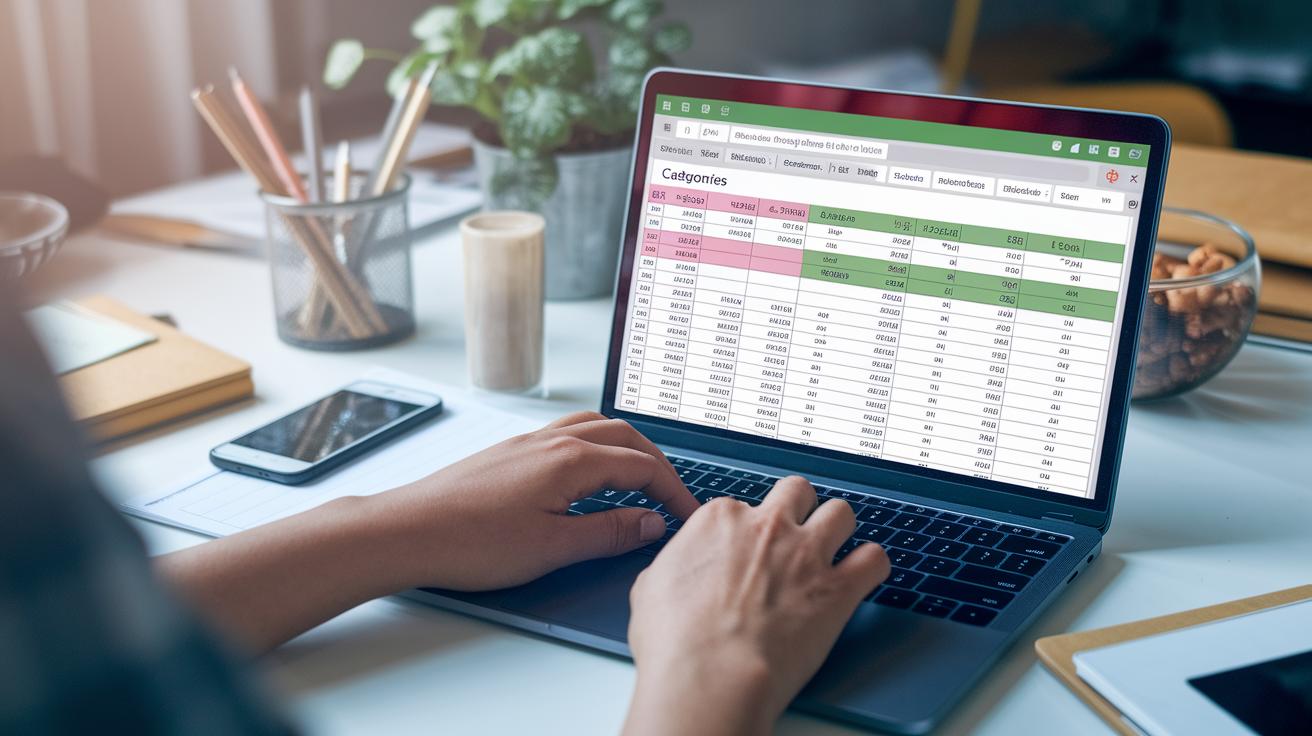
Start by moving your credit card and bank transactions into a simple Excel sheet. For example, if you notice charges at Sephora for $56, $127, and $24, jot each one down along with the date and vendor name. This simple step helps you catch any odd spending or mistakes right off the bat.
Next, group each expense into a clear category like groceries, bills, or entertainment. Think of it like sorting items into different drawers in your closet, every item finds its perfect spot. Say you have several dining expenses; grouping them under "Food & Dining" makes it easy to see if your meal spending is higher than expected.
Make it a daily habit to check your budget, maybe even twice a day. This routine keeps your spending in check and lets you spot any miscategorized entries early on. Try using a manual spreadsheet for a couple of months to build a solid habit before switching to advanced templates or digital money trackers that automatically sync your data.
Also, take some time to compare your expense categories periodically. A quick look at your monthly totals can reveal small tweaks needed in your spending plan. Keeping every transaction recorded with care makes your budgeting process both clear and effective.
Managing Income and Allocating Funds in Your Budget

Begin by writing down every single income source you have, your main salary, those side gigs, freelance jobs, and even little streams like dividends. Think of it like collecting all the puzzle pieces before you see the full picture. When you’ve got the complete list, subtract your organized expenses to create what's known as a zero-based budget, where every dollar gets a clear job.
Then, if you find you have some extra cash, put it toward your financial goals. Maybe that surplus can boost your emergency fund or help you pay down debt faster. This step shifts your budget from a mere record-keeper into a dynamic plan for your financial future.
If you run into a shortfall, take a hard look at your discretionary spending, like dining out or entertainment. Cutting back here can help regain balance quickly. Have you ever tried the envelope system? It works wonders: you assign a set amount of cash to each spending category so you always know how much you’ve got left.
By checking in on your income and expenses regularly and tweaking things as life changes, you're not just staying on top of your spending, you’re paving the way to reach your financial dreams while keeping daily life comfortable.
Setting and Prioritizing Financial Goals in Your Budget

Begin by setting clear money targets that steer every spending choice. Try breaking your goals into bite-size pieces – like a one-month emergency fund as a short-term aim, a three- to six-month reserve in the medium term, and long-haul plans for retirement or a home down payment. Jot these down in a way that lets you track your progress, and remember: earmarking at least 10% of your income for saving or giving can really strengthen your financial footing.
Next, focus on covering your basic needs – think food, utilities, shelter, and transportation – before splurging on extras. When your income or expenses shift, adjust your budget accordingly. Take a moment each month to review your progress and fine-tune your savings plan, because every little contribution counts in the long run.
Imagine putting aside a small amount each week just for emergencies. It may seem minor now, but this habit can build a solid financial safety net over time. Stay flexible and be ready to tweak your plan as life changes, all while keeping your financial goals clearly in view.
Budget Management Tools and Templates

If you want to make budget tracking feel effortless, try exploring different financial tools and ready-to-use templates. Many folks swear by EveryDollar, a handy app that pulls in your bank data in real time. Imagine setting up your budget and then watching as every spent dollar updates on the screen, just like someone once shared, "I discovered extra savings simply by monitoring my live bank balance."
There's also a neat digital twist on the classic envelope system. Picture it like having a few clear jars: one for your everyday needs and another for your fun extras. One user mentioned, "I used a simple app that instantly showed where my money was going, which really pushed me to keep non-essential spending in check."
If spreadsheets are more your style, start with a basic Excel sheet. After a couple of months, you might feel ready for a more detailed template. Many people find pre-populated templates on websites like Etsy to be a great way to jumpstart their budgeting process. These setups give you a clear view of your expenses, starting with a tidy weekly summary before breaking things down even more.
For those who like a little guidance, online budget calculators can be incredibly useful. These tools generate a starter budget by using national-average expense breakdowns, making it easier to compare your spending and your income.
- EveryDollar for real-time data syncing
- Envelope-system apps for clear cash allocation
- Excel spreadsheets ranging from basic to advanced, plus pre-populated templates
- Online calculators for a simple starter budget
If you’re curious about a downloadable template, check out a “small business budget spreadsheet.” And if you’re after quick insights, a “finance calculator” might give you just the right ratios to balance your take-home pay with your expenses.
Reviewing and Adjusting Your Budget for Ongoing Success

Try to set aside a few minutes each week to take a fresh look at your budget. Use this time to check your daily transactions and make sure every expense is correctly categorized, this could mean catching something like a birthday gift that slipped into the wrong category and might otherwise skew your spending view.
Then, at the end of the month, give your budget a full review. Look over any changes in your income, maybe you landed a raise or started a new side gig, and adjust your spending plan to match. For instance, if you’ve seen higher spending in December because of holiday shopping, consider setting up a temporary category so you can better manage similar spikes in the future.
Regular check-ins can really help keep your finances on track. Use these moments to decide if you need to cut back on non-essential spending like dining out or entertainment. Even a quick weekly update can make a big difference by ensuring your budget continues to reflect what matters most to you.
Final Words
In the action of the guide, we've mapped out a clear method for creating and fine-tuning your budget. We broke down listing incomes, categorizing expenses, setting achievable targets, and choosing practical tools to help manage your finances. Each step provides a simple, repeatable process that you can adjust over time. With a solid plan, you learn how to budget effectively while boosting your financial confidence. Keep refining your system and stay positive, knowing that steady progress leads to a secure future.
FAQ
How can a beginner budget money using free resources?
Budgeting for beginners involves listing income sources, categorizing expenses, and setting clear goals. Free templates or PDFs can guide you through a zero-based approach that tracks every dollar and aligns spending with your priorities.
How do I budget money on a monthly basis?
Monthly budgeting means tracking all income and expenses over the month, assigning every dollar to a purpose. Regular reviews help adjust for spending changes and keep your plan up to date.
How should someone on a low income budget money?
Budgeting on a low income requires prioritizing essentials first, setting modest savings targets, and trimming non-essential spending. Use simple tracking tools to monitor expenses and adjust limits as needed.
How can I budget money to also save effectively?
Budgeting to save effectively involves creating a spending plan that lists income, categorizes expenses, and allocates surplus funds to savings. This balanced method ensures that essential costs are covered while steadily building savings.
What does the 50-30-20 budget rule mean?
The 50-30-20 rule divides your income into three parts: 50% for essentials, 30% for discretionary spending, and 20% for savings or debt repayment, providing a straightforward framework to balance spending and saving.
How can I save $10,000 in 12 months?
Saving $10,000 in 12 months starts with setting a monthly savings goal, reducing discretionary spending, and regularly reviewing your budget. Tracking each expense and adjusting spending habits are key to reaching that target.
What are the seven steps of budgeting?
The seven steps of budgeting are: list all income sources, detail fixed and variable expenses, categorize costs, set realistic financial goals, achieve a zero-based budget, create a savings plan, and adjust the budget as life changes occur.