


Ever wondered if there's a simpler way to start investing in Canada? Index investing could be the smart move that makes a real difference for you.
Imagine putting your money into the entire market rather than picking just one stock, it’s a bit like ordering a full meal instead of just a side dish. In this post, we'll break down what index investing means for Canadians and explain how this straightforward, budget-friendly approach can help grow your savings.
Stick with us, and you might just find that this method is the easy, effective path to building your financial future.
Index Investing Canada Explained: Definition and Key Concepts
A market index is like a snapshot of a specific part of the market, a collection of securities representing one segment. When you invest in an index fund, you're essentially buying into a strategy designed to mimic a set benchmark's performance. It’s kind of like keeping an eye on your favorite sports team's scoreboard, where every move by key players shows you how things are going.
Canadians have several options when it comes to index funds, ranging from mutual funds and exchange-traded funds (ETFs) to segregated funds. Each option is built to follow market indexes closely. Mutual funds offer pricing at the end of the day and sometimes require a larger minimum investment, almost like saving up for a special purchase. ETFs allow you to trade throughout the day, similar to picking up something off the shelf when the timing feels right. Meanwhile, segregated funds bring in extra insurance guarantees, which can be great if you’re after a bit more security with your investments.
Back in 1993, two brothers with a knack for financial advice and investing services set up an organization that has guided many Canadian investors. Their goal was simple: help Canadians achieve financial freedom with straightforward, practical advice. They noticed that many people found investing pretty intimidating and decided to simplify the process. This clear, no-nonsense approach has made investing feel a lot more accessible for everyday Canadians.
Benefits and Risks of Index Investing in Canada

Index investing in Canada can be a smart move because it offers low fees and broad diversification, making it easier to spread your investments over various market sectors. Think of it like ordering a complete meal instead of just one dish, which gives you a taste of everything. Plus, when you invest using registered accounts like a TFSA or RRSP, you benefit from tax-efficient growth since your returns have room to compound without immediate tax hits.
Of course, no strategy comes without risks. Market ups and downs can impact your portfolio, and sometimes the fund might not track its benchmark perfectly due to tracking errors. And let’s face it, when the market gets volatile, it’s easy to get caught up in your emotions and make decisions that might not serve your long-term goals.
Ultimately, it’s all about balancing these benefits with the risks. By sticking to a disciplined, long-term strategy, you can take advantage of the cost savings and market exposure while keeping potential setbacks in check.
Canadian Index Fund Options: ETFs, Mutual Funds, and Segregated Funds
ETFs in Canada let you trade shares throughout the day, giving you a flexible way to engage with the market. With lower expense ratios, usually around 0.06% to 0.25%, options like the BMO S&P/TSX Capped Composite Index ETF, iShares S&P/TSX 60 Index Fund, and Vanguard FTSE Canada All Cap Index ETF help you closely track benchmark performance. Many investors love the real-time market snapshot ETFs provide, they make keeping up with market movements simple and straightforward.
Index Mutual Funds work a bit differently, using an end-of-day net asset value (NAV) pricing approach. This means you get your trade’s price after the market wraps up for the day. Typically, these funds call for a higher minimum investment and have expense ratios ranging from about 0.20% to 0.50%. They’re a solid choice if you prefer a fixed pricing method and don’t mind a potentially higher investment to mirror market returns, even without intraday trading perks.
Segregated Funds are quite similar to mutual funds but add an extra layer of security with insurance guarantees. These funds might appeal to investors looking for legacy benefits and extra protection, despite usually having higher fees compared to ETFs or index mutual funds. They’re a good fit if you value the extra insurance benefits as part of a long-term financial strategy.
| Fund Vehicle | Trading Style | Typical MER | Minimum Investment |
|---|---|---|---|
| ETFs | Intraday Trading | 0.06%-0.25% | Low |
| Index Mutual Funds | End-of-Day NAV | 0.20%-0.50% | Moderate |
| Segregated Funds | End-of-Day NAV with Insurance | Elevated | Moderate to High |
Tax-Advantaged Accounts for Index Investing Canada

Choosing the right account can really boost how your investments grow. With a TFSA, your index funds enjoy tax-free growth, so all your gains stay yours without any tax cuts. It’s a great choice if you want to build wealth without stressing over future tax bills. On the flip side, an RRSP lets you delay paying taxes until your retirement, which lowers your taxable income today and lays a strong foundation for your later years. And while RESP accounts are mainly for saving for education, they can also round out your overall financial strategy, especially if you’re planning to support loved ones with their educational goals. Even a regular taxable account has its perks if you need more flexibility or have already maxed out your registered plans.
Each account has different rules for contributions and withdrawals. For example, TFSA contributions are flexible and any money you take out won’t be counted as income, but withdrawals from an RRSP count as income and might be taxed, which can affect your retirement planning. It all comes down to matching these rules with your personal financial goals. By placing your index funds in the right accounts, you can make the most of tax-efficient growth, better control your cash flow, and support your long-term plans, whether that’s for retirement or other major life events.
How to Start Index Investing in Canada: A Step-by-Step Guide
Imagine your investment strategy as creating a balanced recipe, each ingredient plays a role in nourishing your financial future. Start by planning your approach step by step, even if you’re new to index investing in Canada. You'll set up accounts that align with your financial goals, pick the right mix of assets, and choose investments that gradually boost your wealth. It’s like drafting a blueprint for a secure and promising future.
Before you get started, think about whether a discount broker or a robo-advisor suits your style better. Then, decide on the account type, TFSA or RRSP, that works best to optimize your tax benefits. Picture choosing the right account as setting a solid foundation for your dream home, where every decision builds lasting stability.
Here’s a simple path you can follow:
- Do your research and select a brokerage or robo-advisor – Imagine it like shopping for the perfect tool for a project, ensuring you get the best value and flexibility.
- Open a TFSA or RRSP account – Think of this step as picking a secure vault to safeguard your assets.
- Figure out your target asset mix – For instance, you might decide on 60% Canadian equities and 40% bonds, following a simple, balanced approach.
- Choose low-cost index ETFs or mutual funds – Look for options that come with reasonable fees so more of your money stays with you.
- Set up automated monthly contributions – By building in regular investments, your portfolio can grow consistently without constant attention.
- Keep an eye on fees each year – Regular check-ins ensure your strategy stays on course and adjusts as needed with the market.
By following these steps, you’re laying down a clear, adaptable plan for index investing that grows with your financial goals.
Building and Managing a Diversified Index Portfolio in Canada
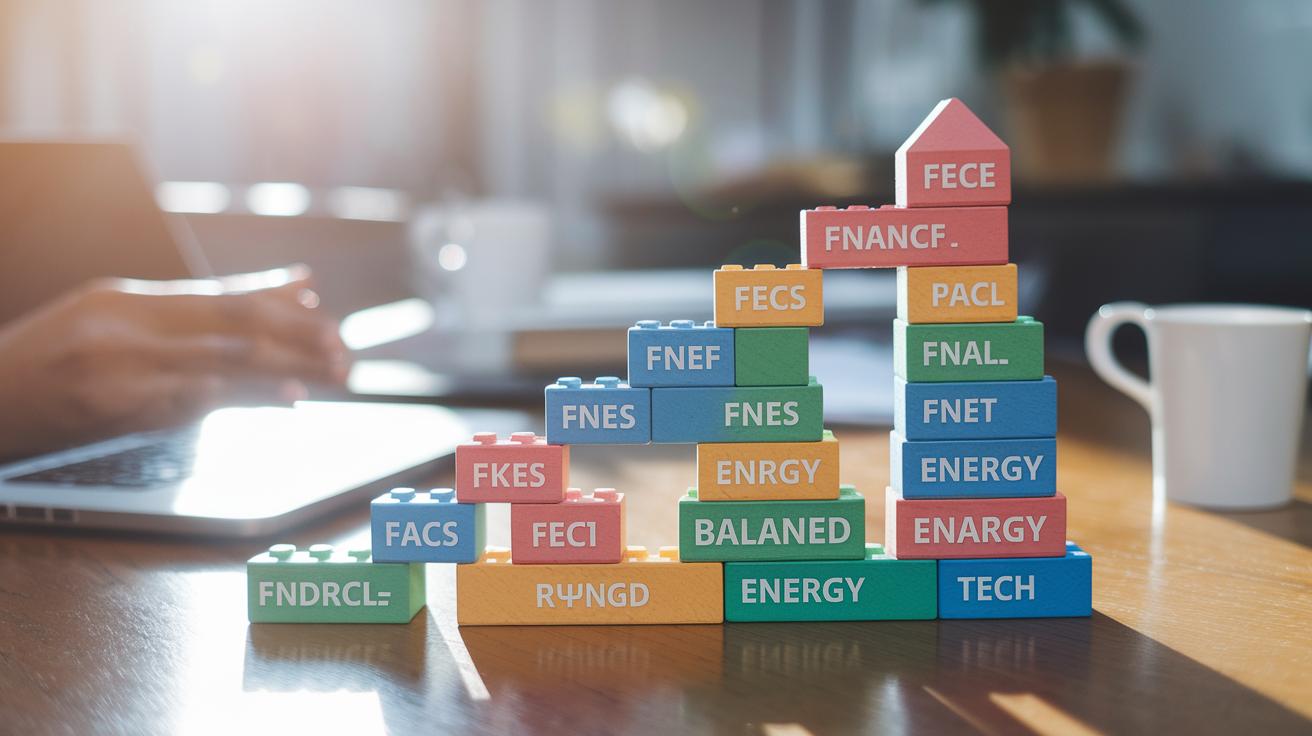
Imagine building your portfolio like putting together a meal where every ingredient counts. With index investing in Canada, you start by spreading your investments across important industries like financials, energy, and tech. These sectors serve as solid building blocks that provide your portfolio with the strength to handle market changes.
A diversified portfolio means that if one part of the market stumbles, it won't take down your entire strategy. Say energy stocks dip; then, strong performances in tech or financials could help ease the impact. Many investors craft model portfolios, whether conservative, balanced, or growth, to match their personal risk tolerance and goals. Think of these models as blueprints that guide how much you invest in each sector.
Rebalancing your portfolio regularly is essential to keep your risk in check. Some investors stick to a calendar-based review, tuning up their holdings once a year, while others wait until an asset class shifts more than 5% from its target. For example, if your tech segment grows too large relative to others, it might be a good moment to sell a bit and boost investments in lagging sectors.
Techniques like Monte Carlo simulations also come in handy. They help you peek into potential future market conditions, offering a clearer idea of how your portfolio might behave under different scenarios.
Comparing Index Investing Canada Platforms and Future Trends
When you start looking into index investing in Canada, it helps to know that there are plenty of choices available. You’ve got traditional brokerages like Questrade alongside big bank platforms such as TD and RBC. Many of these providers offer commission-free ETFs, meaning you can buy or sell shares without paying extra fees. But keep in mind that some platforms still charge trade commissions, so it’s smart to compare fee structures when setting up your investment accounts.
Then there are robo-advisors like Wealthsimple and Qube. These platforms are great if you're after a hassle-free, automated investing experience. They usually come with lower management fees and make portfolio rebalancing simple. Simply put, the range of options means you can pick a service that matches your personal investing style and objectives.
Some platforms are pushing the envelope even further by experimenting with swap-based ETFs. This method uses swap agreements to replicate the performance of an index. If you're focused on steady income, you might want to look into how sustainable the Vanguard Retirement Income ETF Portfolio (VRIF) really is. Additionally, emerging strategies like smart beta tools and AI-enhanced portfolio management are making waves. For example, check out "AI-driven smart investing strategies" if you’re curious about these innovations. These new approaches mix technology with traditional index investing, offering extra ways to assess risk, boost efficiency, and possibly tap into market trends while keeping an eye on your costs.
Final Words
In the action of index investing Canada, we broke down key concepts, from fund types and tax-advantaged accounts to practical steps for getting started. We explored both the benefits and risks, detailed smart fund options, and outlined how to build and manage a diversified portfolio. Each section aimed to simplify complex ideas and boost confidence in making informed financial decisions. With clear guidance and real-world examples, you're set on a path toward a secure and prosperous financial future.
FAQ
How can I invest in Vanguard index funds in Canada?
Investing with Vanguard in Canada means choosing their low-cost index funds available through ETFs or mutual funds, offering diversified exposure to broad market benchmarks in a simple, accessible manner.
What are some of the best and low-cost index funds available in Canada?
The best Canadian index funds usually feature low fees and broad market coverage. Providers like Wealthsimple offer automated platforms, and funds tracking the S&P/TSX or Vanguard portfolios are popular choices.
How can I invest in S&P 500 index funds in Canada and what returns might I expect?
Investing in S&P 500 funds in Canada involves buying ETFs or mutual funds via brokers and robo-advisors. Historical trends suggest a $1,000 investment ten years ago could have grown substantially, though future returns aren’t guaranteed.
Can I invest in index funds in Canada?
Yes, Canadians can invest in index funds by opening accounts such as a TFSA, RRSP, or taxable account through a broker or robo-advisor, gaining diversified exposure to various market segments.
What is considered the best index fund in Canada?
The best index fund depends on your financial goals and risk tolerance. Many investors favor low-cost funds that track widely recognized indices, like the S&P/TSX, for broad market exposure and competitive fees.
What does Couch Potato investing in Canada involve?
Couch Potato investing in Canada refers to a simple, hands-off strategy that uses low-cost index funds to build a diversified portfolio, making it ideal for investors who prefer a straightforward, passive approach.