
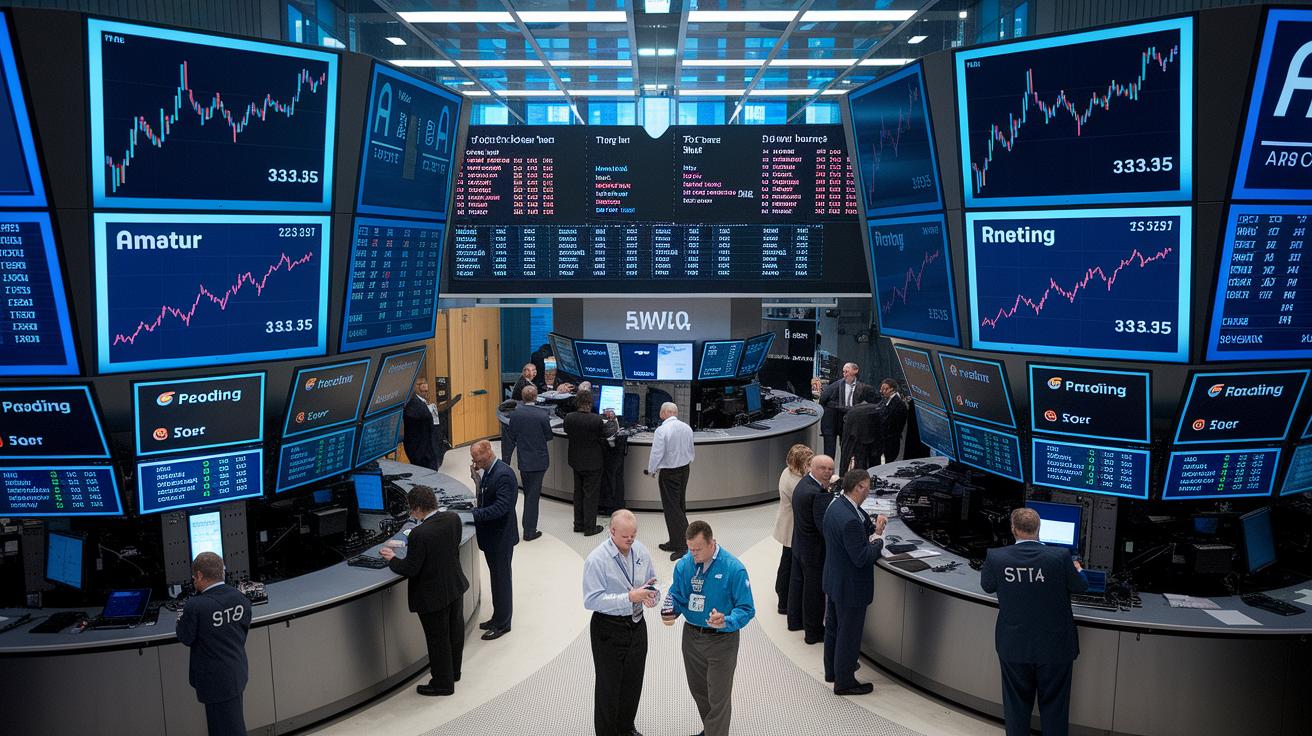

Have you ever thought about how changes in stock market trends might shape your financial future? Picture carefully tracking small shifts in past data while keeping an eye on today's market moves – it’s a smart way to spot opportunities.
In this post, we break down a straightforward approach that blends historical trends with current figures to guide you toward smart stock choices. You'll find clear examples of market dips and surprising recoveries that show just how important it is to pay attention.
Stick with us to discover how these insights could inspire your journey as an investor, helping you make more confident decisions every step of the way.
Stock Market Trend Analysis: Historical and Modern Movements
Recent market assessments have uncovered some intriguing trends. On December 31, 2025 at 03:42 PM ET, experts noticed a broad dip in major indices, with the Dow barely holding onto a year-end rally. It was a moment when past performance charts met modern trend analysis, offering investors a clear snapshot of long-term market movements.
Looking at historical data side-by-side with current observations, there’s a story of volatility mixed with opportunity. For example, imagine turning a $10,000 investment into nearly half a million dollars over just one year. This striking fact shows how powerful smart stock selection can be.
The Elite 100 List highlighted stocks like Palantir and Micron, both of which performed impressively thanks to strong fundamentals across multiple sectors. When you compare past charts with the trends seen in 2025, a consistent pattern emerges, markets are highly responsive to quarterly reports and major economic updates.
In the end, this annual performance review reminds us that despite occasional dips, those who pay close attention to trend analysis can pinpoint the ideal times to buy. By monitoring both historical and modern movements, investors can spot crucial shifts early, paving the way for smarter decision-making and balanced risk-taking.
Technical and Fundamental Drivers Behind Stock Market Trends

Earnings reports play a huge role in how stocks move. When a company releases its quarterly numbers, they can trigger quick bouts of buying or selling. Imagine a scenario where a surprise earnings beat sends a stock soaring, that’s the power of earnings at work.
Interest rates also weigh in on investors’ choices. When rates are low, people often shift their money into stocks hoping for better returns than what a savings account might offer. But as rates climb, fixed income investments can start to look more appealing, drawing funds away from the stock market. These shifts are key to understanding how the market behaves overall.
Global events add another layer of complexity. Take, for example, when Nvidia pushed TSMC to ramp up production of the H200 chip due to increased demand in China. Moments like these remind us that international news can quickly influence stock prices and ripple across different industries.
Many investors turn to tools like IBD’s Big Cap 20 and IBD 50 Stocks To Watch to keep an eye on these market drivers. These resources deliver straightforward insights into current market sentiment, helping investors identify opportunities early on. All of these factors mix together to create the dynamic environment we see in today's stock market.
Sector Evaluation and Rotation Trends in the Stock Market
Taking a close look at each sector gives us a clear view of how individual industries shape overall market trends. In 2025, sectors like Technology, Energy, Healthcare, Financials, and Industrials reacted in their own unique ways to changes in the market. Technology shares surged with rapid digital adoption, while Energy stocks soared as the shift to renewable power picked up speed. It’s a good reminder that staying alert to these shifts is key for any smart investor.
Here's an interesting nugget: In one quarter, a notable boost in energy investments came hand in hand with a 12% jump in renewable stock prices, sparking interest from portfolio managers everywhere.
Key catalyst events played a big role in moving these sectors. For example, Tesla’s bold moves brought fresh energy to both automotive and tech sectors. And when Nvidia ramped up chip production to meet growing demand, the tech sector around the globe felt the impact. Global index variations further highlighted which regions and industries held strong as the year closed.
Here’s a snapshot of what 2025 showed us:
| Sector | Key Highlights |
|---|---|
| Technology | Fueled by innovation and rapid digital progress |
| Energy | Gained momentum from the move toward sustainable practices |
| Healthcare | Experienced steady growth via breakthrough medical advancements |
| Financials | Adjusted strategies in response to evolving fiscal policies |
| Industrials | Improved performance after upgrading operational processes |
This detailed look at sector evaluations and rotation trends shows that by understanding specific industry shifts, investors can better pinpoint opportunities and build a stronger strategy for success.
Stock Market Trends: Inspiring Investor Success

Recent market info is giving us a pretty clear heads-up about what might be coming in the next few months. Dow Jones futures are on an upward climb as many believe 2026 will mark a fresh burst of market energy. Think of it like spotting the first signs of spring after a chilly winter, those early glimmers suggest a more vibrant market season ahead. Traders are watching these shifts like a financial thermometer, reading live changes in pricing that guide their decisions.
As the end of the year approaches, many investors are zeroing in on early momentum, carefully checking quarterly economic forecasts to get a sense of when and how big the next moves might be. Smart investors aren’t just sitting back; they’re gearing up in advance, positioning themselves before major sectors get tested. Even big names like Tesla are under the microscope, serving as clear indicators for the broader economic cycle.
It can also help to keep an eye on live updates from platforms like real-time financial data trends. These resources offer on-the-spot insights into futures predictions, making it easier to understand how the economic cycle is shaping overall market health.
By staying tuned to these signals and forecasts, investors can plan ahead and fine-tune their strategies to keep pace with the evolving market. This proactive approach often transforms careful observations into a roadmap for investor success.
Monitoring Volatility and Momentum in Market Trends
When market mood shifts, keeping an eye on volatility can be a real lifesaver. Investors notice that market stress often leads to sudden jumps in volatility, like during a broad downturn or a weak, late-year rally such as in 2025. These times remind us that understanding risk is as important as grasping market trends. For example, a quick spike in price swings might point out potential risk before it gets out of hand.
At the same time, momentum indicators are key to spotting changes in how strong a trend is. Analysts use these tools to figure out when a trend is losing steam or picking up energy. Think of it like a coach watching players on the field, when you notice someone’s running low, it might be time to switch up your game plan.
Essential tools like volatility index measures give you a real-time glimpse into the market’s pulse. With this snapshot, investors can adjust their positions quickly to stay ahead of economic shifts, reducing risk while spotting new opportunities.
In simple terms, watching these factors closely can lead to smarter decisions, whether you’re rebalancing your portfolio or entering a new trade. And that extra confidence can truly transform your approach to investing.
Strategies for Investors Based on Stock Market Trend Analysis

Smart investors build their strategies using a blend of trend indicators and technical analysis. They often use price action techniques that help uncover tiny shifts in market behavior, shifts that can signal the start of a new phase. For example, setting up clear stock-screening rules lets you filter out potential winners by looking at past performance and current momentum. Ever heard the one about a perfectly timed technical signal turning a small trade into a huge gain? It’s like finding a rare gem hidden in a busy mine.
Mixing these technical methods with ETF market strategies creates a balanced game plan. When market cycles get unpredictable, diversifying across sectors can really help cut the risk. Imagine having a playbook where you rotate funds across different ETFs and regularly re-assess positions with flexible screening techniques. This way, you spot those subtle market shifts before everyone else catches on.
Learning the ins and outs of topics like swing trading and options is essential, too. Many successful investors devote time to reviewing resources like financial analysis methods to get a better grasp of technical signals and overall market sentiment. By diving into detailed charts, trend clues, and volatility measures, you can create a strategy that smartly balances risk and reward.
One solid approach is to combine technical tools with a regular review of market trends. Keeping your portfolio updated with fresh data can stop small losses from snowballing. The trick is to stick with a systematic process, using those technical filters to pick investments, reading price action cues, and rebalancing ETF allocations to match the market’s rhythm. With a steady plan like this, you’ll be well-equipped to handle market ups and downs and pave your way to long-term success.
Final Words
In the action, we explored everything from historical performance charts and annual reviews to technical drivers and sector rotations. We broke down what pushes stock market trends, using real-time data and clear examples.
We also uncovered practical strategies for investors to manage risk and boost confidence amid shifting market signals. With stock market trends guiding our insight, you're now better equipped to make smarter choices and look forward to a financially brighter future.
FAQ
What are the current stock market trends?
The current stock market trends reflect day-to-day fluctuations influenced by sector movements and economic data. Investors benefit from monitoring updated graphs and indices to adjust strategies accordingly.
How can I view live charts of the US stock market today?
The live charts offer real-time data, displaying price movements and key indices. They help investors track market shifts and stay informed during trading sessions through online platforms.
What time does the US stock market open today?
The US stock market typically opens at 9:30 AM ET. This schedule allows investors to prepare and align their trading strategies with early market momentum.
How is the overall trend in the stock market described?
The overall trend in the stock market shows a mix of gradual gains and intermittent declines, driven by earnings, economic indicators, and investor sentiment, offering insights into current market behavior.
What is the 7% rule in stocks?
The 7% rule in stocks suggests that a diversified portfolio returning roughly 7% annually is considered reasonable after accounting for inflation and risk, though its practical application varies with individual goals.
Should I pull my money out of the stock market?
The decision to exit the market depends on your risk tolerance and investment strategy. Evaluating current trends and long-term goals can guide whether to hold or adjust your portfolio.
What is the prediction for the US stock market?
Predictions for the US stock market indicate cautious optimism, with forecasts suggesting potential growth amid short-term volatility. Investors should use forecasting tools and current updates to refine their strategies.